Table of contents
How do you sell a building that does not exist yet? Renders and a sales PDF explain the unit, its square footage, ceiling height, and finishes, but explaining a unit does not sell it. And when the bank ties your construction loan to a presale threshold, explaining the building is not enough. You have to sell it before it exists.
This guide hands you a five-phase plan for that, built on how presales work rather than a generic funnel. Each phase moves a buyer one step closer to a signed contract, and the whole sequence aims at one target: enough binding presales to release your loan.
Property development marketing is how a developer turns interest into binding contracts for units in a project that is not built yet. It spans pre-development, pre-sales, construction, and close-out. For you, it is revenue engineering: the point is signed contracts and the presale evidence a lender needs.
Why Is Marketing a Development Different From Selling a Finished Home?
Selling a finished home is a sprint: you stage it, list it, and close it. A development is a multi-year job to sell something with no walls yet, on a clock your construction loan sets. You build demand and a brand instead of listing an asset.
Three parties carry the risk of a presale, and each one bets on the same thing, how well you sell the project before it exists:
- You, the developer. You build with buyers’ deposits and bank financing instead of your own capital alone, so you need contracts early.
- The buyer. They commit at a pre-construction price, below what the finished unit will list for, and pay in stages.
- The bank. It wants proof of real demand, as binding contracts, before it funds construction.
Every one of those bets rests on your renders, your sales gallery, and your brand. Those three assets turn an inquiry into a signed contract, and signed contracts into a released loan. Treat the work as revenue engineering, and the five phases below fall into order.
What Are the 5 Phases of Property Development Marketing?
The plan tracks your project’s own timeline, from positioning 12–24 months out to final close-out. Each phase carries one job: move buyers toward a binding contract, and reach the threshold that unlocks financing.
- Phase 1: Position and brand the project before you set a price.
- Phase 2: Build the visual product, your renders, a digital sales gallery, and a developer website.
- Phase 3: Open reservations, then convert them into binding contracts.
- Phase 4: Hit the presale threshold that releases your construction loan.
- Phase 5: Sustain absorption through sell-out and closing.
Phase 1: Position and Brand the Project Before You Set a Price
Position first, price second. Before you commission a single render, decide who the project is for, claim a market position only you can own, and build a developer brand buyers recognize. The projects that sell out hold a position the competitor down the road cannot copy.
At this stage the product is a name, a lifestyle, and an address, because you have nothing else to sell yet. You chase the same buyers, search results, and broker shortlists as everyone nearby, so a position you own is what turns a marketing budget into recognition. Work in this order:
- Define the audience. Name the buyer before you name the building.
- Shape the project to what that audience values. Fit the unit mix, the amenities, and the price to them.
- Position it where that audience wants to live. Claim the emotional territory competitors leave open.
- Build a developer brand buyers trust. Buyers check the developer before they sign, so a consistent name across your renders, website, and collateral answers the question they are already asking.
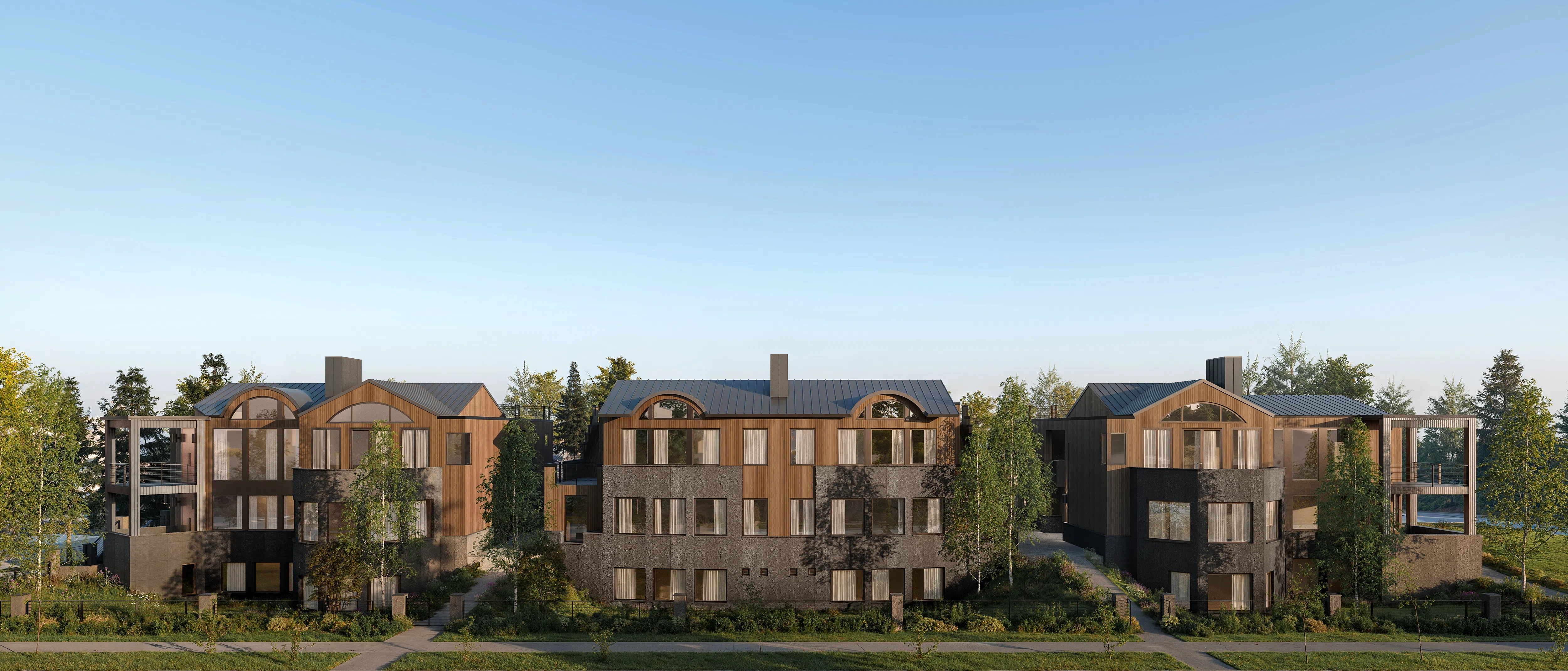
Positioning also fixes product problems that price cannot. Take The Preserve at the Woodmere Club, a 55+ condominium community in Five Towns, New York, built on one idea: “Stay Rooted.” Some balconies looked onto plain views, so Fortes carried the brand idea, roots, into the renders and the landscape through a curated plant palette, and the same brand then read through every part of the project.
Brand is not a soft cost. The branded residences sector grew from 169 schemes in 2011 to 611 in 2025, and Knight Frank forecasts 1,019 by 2030 as developers chase the premium a brand delivers(Knight Frank, 2025). Set the position early, because every later marketing dollar builds on it.
Phase 2: Renders, a Digital Sales Gallery, and a Developer Website
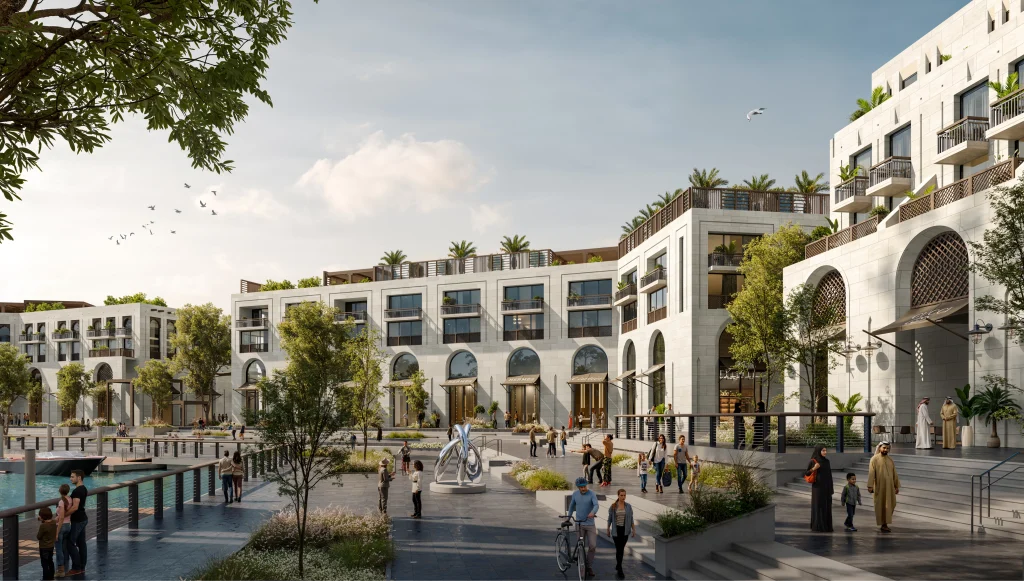
When the building does not exist, your CGI renders, your digital sales gallery, and your developer website are the product. A buyer spending seven figures decides without touching a real wall, so visualization is all they have to judge. This phase turns your position into something a buyer can walk through.
You can reach this phase with a set of renders and nowhere to put them. A PDF explains a unit, and then it stops. A digital sales gallery lets a buyer do the things that build ownership in the first 24 hours of contact:
- Explore the floor plan and pick a specific unit.
- See the view from that unit’s real floor and orientation, the detail that sets the price in a tower.
- Move through the space, the amenities, and the neighborhood before you build any of it.
- Share the whole thing through one link a broker can send before a meeting.
Your developer website is the hub that gallery lives in, and it earns its keep as a conversion engine. Build the renders and the site together and they hold one visual language from day one, so you skip the drift you get when a web team lays pages over renders it received late. Stand this layer up 6–12 months before launch, so your reservations have somewhere to land.
Phase 3: Open Reservations, Then Convert Them Into Binding Contracts
A reservation is a soft, refundable hold. A contract is the sale. Phase 3 builds a book of reservations to test demand, then converts them into binding purchase agreements once the cancellation window closes.
The gap between the two is where the money turns real:
- Reservation. The buyer signs a reservation agreement and puts down a deposit that stays refundable. In Florida, you must return that reservation deposit in full on written request. It holds a place in line, nothing more.
- Binding contract. Once you register the condominium documents and the buyer signs, the deal converts. A Florida condo buyer can still cancel within 15 days, excluding weekends and holidays, of signing and receiving the condominium documents. After that, the deposit is committed and the unit is sold.
You convert with the same tools you built in Phase 2: the sales gallery, real-time inventory, live pricing, and a unit-specific document that matches the conversation a broker is already having with the buyer.
Phase 4: Hit the Presale Threshold That Releases Your Construction Loan
This is the phase that pays for the building. A lender will not release a construction loan until a large share of your units sit under binding contract, so every earlier phase points here. Miss the threshold, and the project stalls no matter how good the renders look.
Your deposits do more than signal interest. They help pour the concrete:
- In Florida, the first 10% of a buyer’s payments stays protected in escrow(Fla. Stat. 718.202, 2025).
- Once construction starts and the contract carries the required notice, you can spend deposits above 10% on actual construction costs.
- So your buyers help finance the tower they are buying into, which is why lenders count binding contracts and discount soft interest.
Villa Miami shows the threshold working. Terra and One Thousand Group closed a $285 million construction loan from Tyko Capital in December 2024 for their 56-story, Major Food Group-branded tower in Edgewater, 70 residences priced from $5 million, then broke ground toward a 2027 delivery(The Real Deal, 2024). The presales came first, and the loan followed. On a multi-unit project, watch your absorption rate, the pace at which units go under contract across the presale window, because that number tells you and the lender whether the threshold is in reach.
Phase 5: Sustain Absorption Through Sell-Out and Closing
Do not ease off at 60% sold. The last units are the hardest and priciest to move, and closing is where the revenue lands. Phase 5 protects both your pace and your price through handover.
Keep the sales floor live:
- Show scarcity. Real-time inventory and a visible sold board give a hesitant buyer a reason to act now.
- Keep brokers equipped. Unit-level materials and current pricing let them close without doing math at the table.
- Place press. Editorial coverage validates the purchase for a buyer’s family and holds your price when a late buyer pushes for a discount.
Closing then finishes the job. The building earns its Certificate of Occupancy, the buyer pays the balance a mortgage can now cover because the unit exists, and title changes hands. You collect full revenue only here. A strong brand and steady demand hold your prices through this stretch, while a weak finish forces the discounts that eat your last and highest-margin units.
How Does Fortes Help Developers Execute This 5-Phase Plan?
Fortes Vision Marketing Services builds the pre-sale stack this plan runs on, your renders, a digital sales gallery, and a developer website, as one engagement produced in-house. It is the one studio that replaces three separate vendors: a CGI studio, a web agency, and a branding designer. It works with owner-led mid-market US residential developers on first and second projects in the 5–170 unit range, with clients clustered in New York, Miami, Austin, and Los Angeles.
The in-house model keeps the plan on a financing timeline:
- One visual language. Fortes Vision produces the CGI in-house, then builds the digital sales gallery from those same renders, with no revision cycle between vendors.
- Speed you can plan around. Fortes delivers the gallery, one link carrying the renders, animation, VR tour, unit selection, and brochure, in about 5 weeks.
- A site built with the renders, not over them. The developer website and the 3D content come from one process, so the design holds the same look as the visuals.
This is also where a gallery beats a PDF on the bank question from Phase 4. A digital sales gallery records buyer interest, unit selections, and time spent on each unit, which gives a lender the kind of demand data a brochure never captures. The visualization comes from Fortes Vision, the award-winning parent studio that produces the CGI in-house, and it shows up in developer work such as Gardens Residence, a property brand-packaging engagement for a park-like urban development.
Pricing follows your project, not a rate card. Developer websites for pre-construction projects typically start around $12,000–$80,000, and a full pre-sale stack of renders, a digital sales gallery, and a website typically runs around $40,000–$120,000, depending on unit count and production scope. Every quote is custom, so exact numbers come from a project estimate.
What Should Developers Look For in a Property Development Marketing Partner?
Judge a partner on whether their work closes buyers before the building exists, not on how long their service list runs. The right one produces the visuals, builds the sales tools around them, and ships both before your financing window closes.
Compare vendors on these points:
- Presale velocity and bank evidence. Ask whether the sales tool captures the buyer interest and unit selections a lender can read.
- In-house CGI. One studio making the renders and the gallery keeps the visuals consistent and cuts the revision cycles a separate render shop adds.
- The full stack in one engagement. Renders, gallery, and website from one team beat three vendors syncing across three timelines.
- Broker enablement. Real-time inventory, live pricing, and unit-level materials let brokers close on the spot.
- Delivery speed. Measure the timeline against your construction loan, not a generic launch date.
- Developer focus. The partner should build for pre-construction pipelines, not rebrand agent listing tools
A property development marketing plan is a sequence, not a channel list. You turn a position into renders, renders into a sales gallery, a gallery into binding contracts, and those contracts into a released construction loan, all before you break ground. Compare partners on who makes the visuals, who builds the sales tools around them, and how fast they deliver against your financing window. Then talk to Fortes Vision Marketing Services, the one studio that produces all three in-house. Tell them your unit count, location, and timeline, and they scope it in one call at Marketing.Fortes.Vision.