Table of contents
A new construction project has to sell itself before it exists. The building is a rendering, the units are line items on a floor plan, and the lender wants presale evidence before it releases the construction loan. Done well, new construction marketing turns that unbuilt project into signed reservations before ground breaks.
Construction marketing is the practice of generating qualified buyer demand for a residential development before or during construction, using CGI renders, a digital sales gallery, a developer website, and broker distribution to convert interest into signed reservations that satisfy a lender’s presale threshold.
The market rewards developers who pre-sell fast. New-home sales in the US ran at a seasonally adjusted annual rate of 580,000 units in May 2026, and first-time buyers made up 33% of purchases (NAR, 2026). Buyers have accepted, in the words of NAR Chief Economist Lawrence Yun, “above-6% mortgage rates as the new normal”, and they now research longer before they commit.
This guide covers:
- The market trends reshaping how developers reach buyers before construction starts
- 8 new construction marketing strategies that move presales
- A framework for matching those strategies to your project’s size and stage
What Trends Are Reshaping Construction Marketing in 2026?
Three shifts are changing how mid-market developers reach buyers before a project is built. Each one carries a data signal and a consequence for your presale pipeline and your financing timeline.
Buyers Have Accepted 6% Rates, but They Shop Harder
Demand holds up, but buyers stay sensitive to affordability. Existing-home sales sat at a 4.09 million-unit annual pace in June 2026, and NAR ties the month-to-month swings to how sensitive buyers are to affordability conditions (NAR, 2026). A pre-construction project now competes against move-in-ready resale inventory and a buyer who takes weeks to decide.
- What it means for your pipeline: the presale window runs longer and more contested, so tools that let a buyer feel ownership early protect your absorption rate and your construction-loan timeline.
Immersive Visualization Is Expected, but Still Underused
Buyers want to explore a home before they visit, and most of the industry has not caught up. NAR’s 2025 REALTOR Technology Survey found 88% of agents had not tried AR or VR, while drone photography and video reached just 52% of agents (NAR, 2025).
- What it means for your pipeline: a developer who shows pre-construction units through an interactive digital sales gallery and photorealistic CGI stands out against competitors still emailing PDF floor plans.
AI Is Reshaping Search, but Property Stays Visual and Local
AI answers keep growing, and real estate remains one of the least affected categories. Google AI Overviews reached 15.69% of all queries by November 2025, and commercial-intent overviews climbed from 8.15% to 18.57% across the year (Semrush, 2025). Real estate still sees AI Overviews on under 3% of keywords, because property decisions stay visual, local, and high-intent.
- What it means for your pipeline: keep investing in your own site and visuals, and structure your project content so buyers and AI engines can both read it.
New Construction Marketing Strategies at a Glance
Here are the 8 strategies covered below, what each one does, and the presale payoff that matters to a developer facing a financing deadline.
| # | Strategy | What it does | Presale payoff |
|---|---|---|---|
| 1 | Sell the building before ground breaks | Leads with photorealistic CGI as the product | Opens the sale months before completion |
| 2 | Replace the PDF with a digital sales gallery | One link buyers explore and configure | Turns passive interest into recorded demand |
| 3 | Build a website that closes, not just shows | Adds inquiry flows and unit availability | Captures and qualifies buyers automatically |
| 4 | Start the buyer list 12–18 months out | Warms a pre-launch registration list | Delivers reservations on launch day |
| 5 | Give brokers one link, not attachments | Centralizes every asset behind one URL | Speeds broker distribution and buyer immersion |
| 6 | Make the presale threshold your KPI | Aligns marketing to the lender’s number | Produces the evidence that releases the loan |
| 7 | Optimize for AI answers, not just links | Structures pages for buyers and AI engines | Protects discovery as search changes |
| 8 | Use one studio, not three vendors | Consolidates CGI, web, and brand | Removes the coordination tax and visual drift |
The 8 New Construction Marketing Strategies
1. Can You Sell the Building Before You Break Ground?
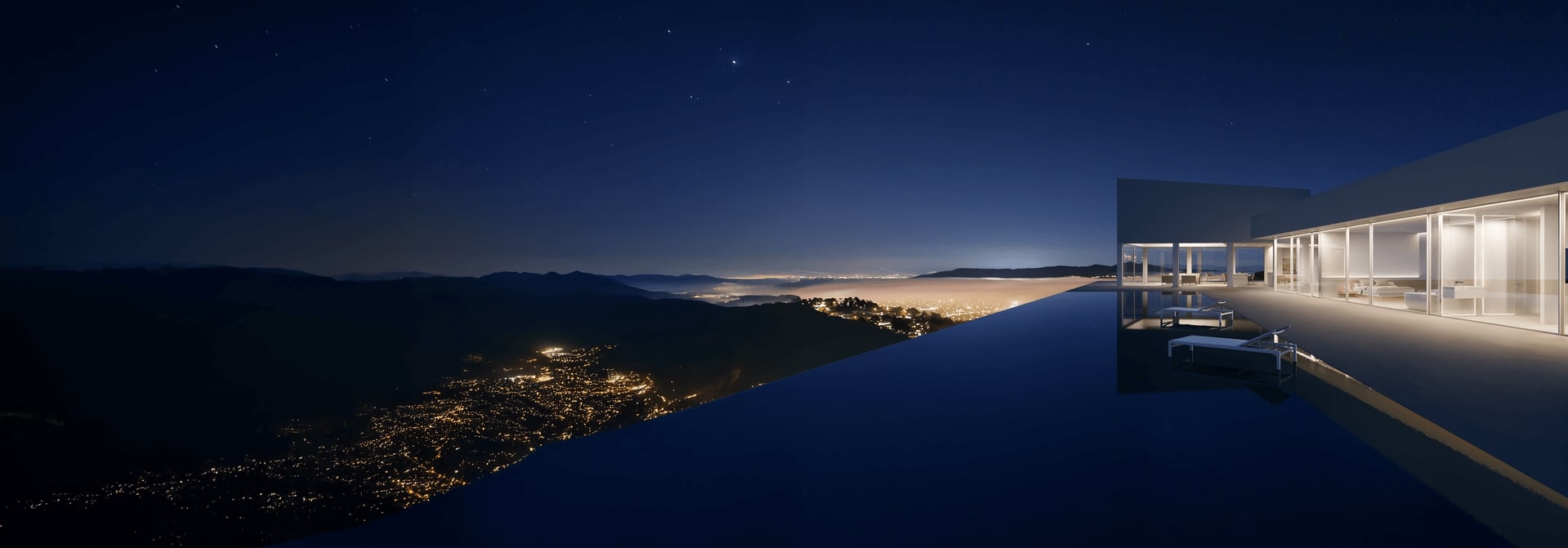
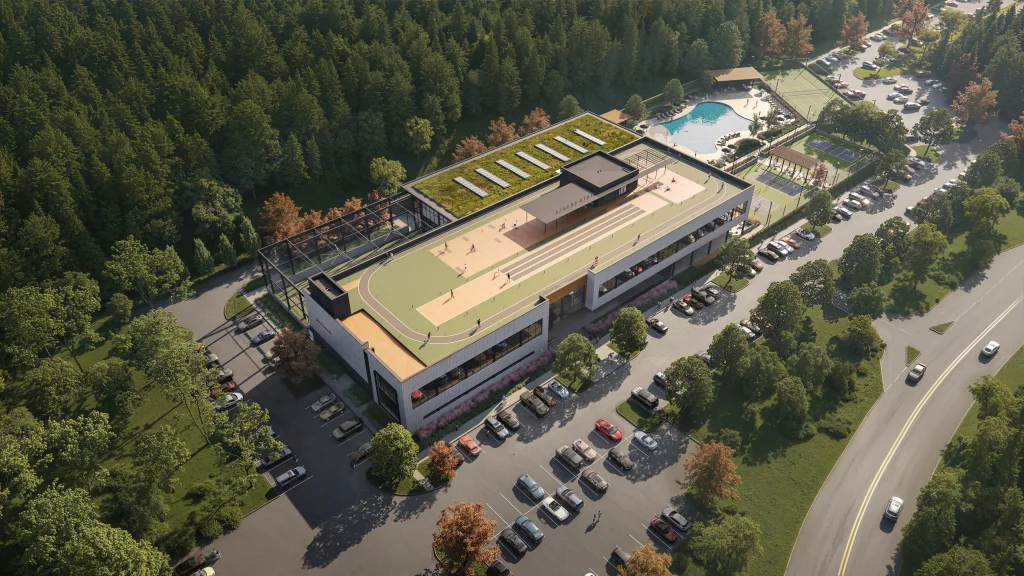
Yes, and pre-construction developers who lead with photorealistic CGI do it as standard practice. Until the building exists, renders are the product, so they carry the first and often the deciding sales conversation.
- A move-up or downsizing buyer commits to a space before physical contact, so visual quality drives the early presale, not the sales office.
- Treat renders as revenue infrastructure, and produce them early enough to open reservations while the site is still a foundation.
2. What Replaces the PDF Brochure That Buyers Ignore?
A digital sales gallery replaces it: one link where a buyer selects a floor, chooses a view, and sees the unit in photorealistic 3D. It records which units draw interest and how long buyers linger.
- That behavioral data turns guesswork about demand into evidence you can show a lender.
- A digital sales gallery captures the buyer’s intent in the first 24 hours, when the window to hold a unit is shortest.
3. Does Your Project Website Actually Close, or Just Show?
A developer website should capture and qualify buyers, not display renders alone. The difference is inquiry flows, live unit availability, and broker-ready links built into the site from the first design pass.
- Most project sites are a gallery with a contact form attached, which leaks the buyers your renders attracted.
- A real estate website built for a development sequences each visitor toward a reservation, so the visual investment upstream becomes signed interest downstream.
4. When Should You Start Building the Buyer List?
Start 12 to 18 months before launch, not at groundbreaking. A warmed pre-launch registration list gives you reservations on opening day and the presale momentum a lender wants to see.
- Developers who wait for the model unit launch to silence; the ones who build demand during production launch to a waiting list.
- A registration list is the cheapest presale asset you own, and it compounds the longer you nurture it.
5. How Do You Make Brokers Actually Use Your Materials?
Give brokers one link instead of a folder of attachments. When every render, animation, floor plan, and view sits behind a single URL, a broker shares it in seconds and the buyer arrives already immersed.
- Fragmented assets create friction, and friction is where broker interest fades.
- One link keeps your brand and pricing consistent across every broker conversation.
6. Should Your Bank’s Presale Threshold Be a Marketing KPI?
Yes. Treat the lender’s presale requirement as the number your new construction marketing is built to hit.
- Every render, gallery visit, and reservation becomes evidence toward the construction loan, which reframes marketing from a cost line into a financing mechanism.
- Sharing one KPI across marketing and financing turns the sales gallery into the asset that moves your loan forward.
7. Are You Optimizing for AI Answers, Not Just Google Links?
You should be, because buyers research through AI Overviews and chat assistants before they reach your site. Structure your project pages with clear definitions, specifications, and FAQ blocks that buyers and AI systems can both extract.
- Real estate still sees AI Overviews on under 3% of keywords (Semrush, 2025), so your own visual, local content still carries the decision.
- Optimize for discovery in both places, and keep the immersive experience on your site where the buyer converts.
8. Why Hire Three Vendors When One Studio Can Deliver?
Coordinating a CGI studio, a web agency, and a branding designer burns weeks and produces visuals that do not match. One studio that produces the renders, the gallery, and the website in one visual language removes the coordination tax.
- A buyer who sees three visual dialects reads the project as unfinished.
- Consolidation protects both your timeline and the visual coherence that makes a pre-construction project feel real.
How Marketing.Fortes.Vision Helps Developers Execute This
Marketing.Fortes.Vision is the pre-sale marketing studio that delivers CGI renders, a digital sales gallery, and a developer website as one engagement, produced in-house by its parent studio Fortes Vision. It is the one studio that replaces three vendors: the CGI studio, the web agency, and the branding designer.
- In-house CGI: every render comes from the parent studio, recognized in the USA Property Awards, so visual consistency across the gallery and the website is structural.
- 5-week gallery: the core digital sales gallery can be shipped in about 5 weeks (project delivery is custom and depends on scope), which matches the speed-to-market and visualization trends above.
- Proof: for The Preserve, a 55+ condominium community of roughly 150 residences on the former Woodmere Club grounds in Five Towns, New York, Fortes built the “Stay Rooted” brand positioning and used CGI renders to carry it, adding plant life to balcony views so each image showed the brand.
- Pricing: developer websites start around $12,000, and a full pre-sale stack typically runs $40,000–$120,000 by unit count and scope. For exact scope.
How to Apply This to Your Project
The right new construction marketing mix depends on your project’s size, stage, and financing pressure. Use this framework to sequence the 8 strategies against your situation instead of running all of them at once.
- First project (5–30 units): start with strategies 1, 2, and 4. Renders produced early, a digital sales gallery buyers reach by link, and a registration list opened 12 to 18 months out give a lender the clearest early demand evidence at the lowest cost.
- Second project or larger (30–170 units): add strategies 3, 5, and 6. A developer website with inquiry flows, one-link broker distribution, and a presale KPI tied to your loan covenant matter more as unit count and absorption complexity rise.
- Bank deadline driving the calendar: work backward from the presale threshold. Count the reservations that release your construction loan, then treat every render, gallery visit, and broker link as evidence toward that number.
- Brokers say the materials are not closing: prioritize strategies 2 and 5, because the problem is usually distribution and immersion, not price.