Table of contents
Most developers commission six figures of architectural renders, then launch presales with a PDF and a phone number. The PDF lists square footage, ceiling heights, and finishes. It does not let a buyer stand in the unit, see the view, or hold a unit before the building exists.
When the bank asks for presale evidence before it releases the construction loan, a slide deck of intent is not traction. Commercial real estate marketing for a developer is not lead generation for an existing listing—it is the work of engineering a revenue event before construction starts. This guide covers 20 commercial real estate marketing ideas and tactics for 2026, the market trends shaping them, and how to match each one to your project’s stage, unit count, and financing deadline.
Commercial real estate marketing, for a developer, is the system of visuals, sales tools, and brand that sells a project before it is built and proves buyer demand to the bank: CGI renders, a digital sales gallery, a developer website, interactive floor plans, and broker materials, measured by reservations and absorption rather than impressions.
What Trends Are Shaping Commercial Real Estate Marketing in 2026?
Four forces are setting the agenda for developers this year: tighter financing, a thinning supply pipeline, the return of younger digital-first buyers, and the consolidation of marketing production into fewer vendors. Each one changes where a marketing dollar should go before groundbreaking.
Tighter Financing Makes Presale Evidence the Gatekeeper
Higher financing costs are not easing as fast as developers hoped. PwC and ULI’s Emerging Trends in Real Estate 2026, built on input from more than 1,700 investors, developers, and lenders, reports that economic uncertainty and higher financing costs continue to persist (PwC/ULI, 2026). With more than half of the $13 trillion in outstanding US mortgages locked below 4% (CBRE, 2026), capital is cautious and underwriting is strict. For a pre-construction developer, that raises the bar on presale evidence—lenders want to see real buyer demand, not a brochure of intentions, before releasing a construction loan.
A Thinning Supply Pipeline Opens a Pre-Sale Window
The development pipeline is shrinking, and that favors projects breaking ground now. CBRE’s 2026 outlook estimates a shortage of 3.4 million single-family homes and a 105% monthly premium to buy versus rent, which keeps demand pointed at well-marketed new supply. Multifamily vacancy sits at 4.4%, below the 2010–2019 average of 5.2%, and is expected to fall as units absorb. Fewer competing launches means a developer who can present and pre-sell early captures attention while the field is thin—but only if the sales tools are ready when the window opens.
Younger, Digital-First Buyers Decide From a Screen
First-time buyers returned to 35% of the market in mid-2026, the highest share since June 2020. These are younger, digital-native buyers making a high-stakes decision—the median existing-home price is $429,300 (NAR, 2026)—and they research on a screen long before they call. They still rely on professionals: 88% of buyers used an agent or broker in NAR’s latest profile. Your project is judged online first, and your brokers need a tool that closes.
Technology and Vendor Consolidation Reshape How Projects Sell
Technology is moving from add-on to default. PwC and ULI describe an industry where technology integrates across the built environment, rewarding players who combine speed, data-driven insight, and long-term strategic vision. For marketing, that means interactive galleries, view-from-window tools, and CRM-connected sales data—and it raises the cost of stitching those together across three separate vendors. Developers are consolidating to one studio that produces the renders, builds the digital sales gallery around them, and ships the website, because coordination drift between a CGI shop, a web agency, and a brand designer is a hidden tax on the timeline.
20 Commercial Real Estate Marketing Ideas and Tactics for 2026
These tactics are ordered roughly from the revenue-critical core outward. Each one ties back to the same goal: reserving units before construction starts and producing the demand evidence the bank wants to see.
1. Replace the Sales PDF With a Digital Sales Gallery
Lead the launch with one link a buyer actually uses, not a static brochure. A digital sales gallery puts every render, animation, floor plan, and view in one place a buyer can explore in the first 24 hours after contact—the window when a unit gets held. A PDF explains a unit; a gallery sells it, and it captures who engaged with what. That record of who looked at which unit is the first layer of your presale evidence.
2. Build Presale Evidence Into the Sales Tool
Treat your sales platform as data collection for the bank, not just a showcase. When buyers select units, configure views, and spend time on specific floors, that activity becomes the demand record a lender evaluates before releasing a construction loan. Intent is a phone call; traction is a pattern of engagement you can show. Lenders increasingly want to see reservation counts, deposit activity, and unit-level interest, so capture all three from the first click.
3. Commission CGI Before You Break Ground
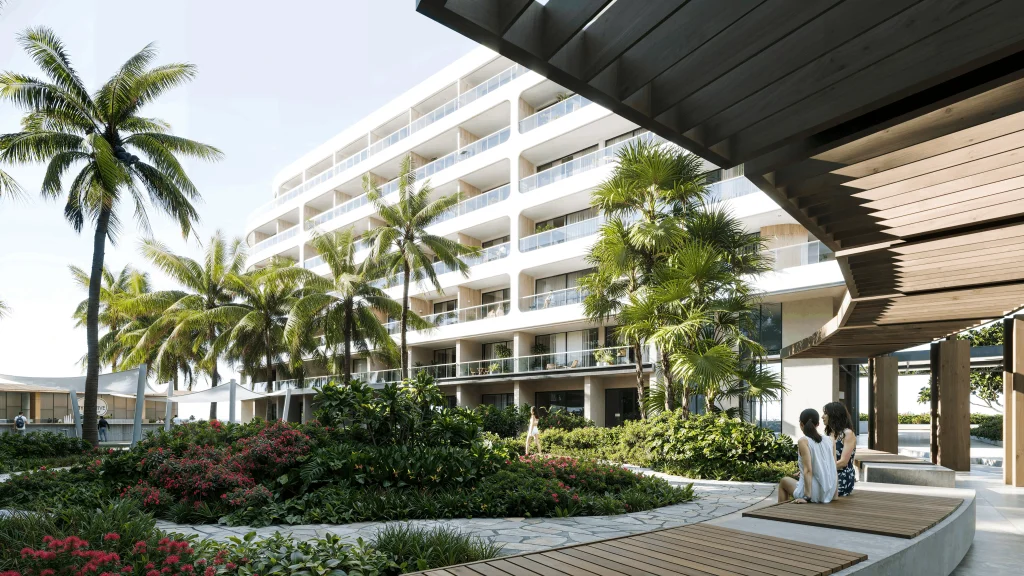
Visuals are the only way to sell a building that does not physically exist yet. Photorealistic renders let buyers feel the space, the light, and the finish months before a model unit is framed, which is what moves a reservation. Those marketing renders also feed every downstream asset—the gallery, the website, paid ads, and broker decks. One production cycle done early pays for itself across every channel that follows.
4. Show the View From Every Window
The view is often the deciding factor, and it is the one thing a floor plan cannot convey. A view-from-window visualization for each unit and floor shows buyers exactly what they will see, which raises willingness to reserve higher floors and premium lines. It is one of the strongest pre-construction selling tools a developer can put in a buyer’s hands. It also justifies premium pricing on higher floors, which lifts the revenue ceiling of the whole project.
5. Run Your Own Developer Website, Not a Generic Listing
A developer website is a conversion asset you control, distinct from a portal listing built for agents. It carries your brand, your inquiry flow, and your sales gallery, and it ranks for your project name when buyers and brokers search. Generic real estate sites optimize for the platform; yours should optimize for your absorption rate. It is also where your paid ads, broker links, and search traffic should all land.
6. Sequence the Launch Around the Financing Threshold
Work backward from the bank’s presale requirement, not the construction calendar. Identify the reservation percentage your lender needs, then time broker previews, buyer events, and the digital launch to hit it before the financing window closes. Marketing that ignores the threshold is activity; marketing built around it is strategy.
7. Give Brokers a One-Link Presentation
Brokers sell faster when everything lives behind a single URL. Replace the folder of attachments with one link that opens renders, animation, the 3D tour, floor plans, and the view from each window, ready to share before a meeting. The easier you make the broker’s job, the faster your units move. Brokers reward the developer whose materials let them present anywhere, on any device, without a download.
8. Let Buyers Self-Select With Interactive Floor Plans
Interactive unit selection turns browsing into qualifying. When a buyer picks a floor, sees the price, and walks the layout in 3D, they self-identify the unit they want and arrive at the call ready to talk specifics. Self-navigation shortens the path from interest to reservation and tells your team where demand is concentrating. That signal lets you adjust pricing or release the next phase with evidence, not guesswork.
9. Set the Brand Position Before the First Render
Positioning comes before visuals, not after. A project that owns a position only it can claim—a neighborhood, a lifestyle, a buyer—turns marketing spend into recognition and shortens the path to reservation. Fortes Vision’s work on Nele in Vienna shows the pattern: one position answered both of the project’s product weaknesses at once. Set the position first, then carry it through every render, the gallery, and the website so the project reads as made for its buyer.
10. Use Lifestyle Animation for Paid Social to Fill the Funnel
Lifestyle animation is animation with people in the scene. It works better than a plain walkthrough because people make the clip feel emotional, and emotion is what drives clicks on Meta. It pulls in buyers who would never open a spec sheet. Match the animation to the funnel stage. At the awareness stage, lead with lifestyle animation to win attention and inquiries. At the consideration stage, show the project itself: the building, the units, and the views. Treat animation as demand generation, not decoration, and point every click at the gallery. Targeted clips also let you test which buyer and which unit type respond before you commit a bigger budget.
11. Tie the Project to Its Place
Buyers buy a location as much as a unit. Marketing that makes the neighborhood the amenity—the walkable district, the preserved nature, the community—reframes trade-offs and earns a premium. Fortes Vision’s positioning for The Preserve at the Woodmere Club in Five Towns, New York, built the entire brand around staying rooted in the community residents already knew.
12. Consolidate to One Studio for Renders, Gallery, and Website
Every handoff between a CGI shop, a web agency, and a brand designer costs time and visual consistency. One studio that produces the renders and builds the sales tools around them keeps the visual language intact and compresses the timeline. Vendor consolidation is a presale-velocity decision, not only a procurement one. Fewer handoffs also means one team accountable for the result, instead of three pointing at each other.
13. Publish Market Context That Builds Trust
Buyers and investors making a six- or seven-figure decision want evidence the project is sound. Sharing absorption data, neighborhood demand, and construction progress positions you as credible and keeps qualified prospects warm through a long decision cycle. Data earns trust that adjectives cannot. Publish it on your developer website and in broker updates so the same evidence works in search and in the sales conversation.
14. Connect the Sales Platform to Your CRM From Day One
Captured interest is worthless if it leaks. Integrating the gallery and website with a CRM routes every inquiry, unit view, and reservation into one pipeline, so no buyer goes cold and every lead is attributed to a source. Real-time data also keeps inventory accurate, so a sold unit disappears the moment it sells.
15. Equip the Sales Lounge With an Offline Presentation Tool
Some of the highest-stakes conversations happen in person, where a sales agent controls the screen. An offline, iPad-based sales tool lets your team walk a buyer through renders, the gallery, and the view in a meeting or sales office without depending on connectivity. The in-person close deserves the same production quality as the digital one.
16. Use the Brochure as the Leave-Behind, the Gallery as the Closer
Print still has a job, but it is not closing the sale. A brochure is the tangible reminder a buyer takes home; the digital sales gallery is where the decision actually happens. Match the format to the moment instead of asking a PDF to do a platform’s work. The brochure opens the door; the gallery, with its unit selection and view tools, walks the buyer to a decision.
17. Design Every Experience Mobile-First
Buyers explore on phones, often before they speak to anyone. A sales gallery and website that load fast and work cleanly on mobile capture the buyer in the moment of highest intent, not after they have moved on. A desktop-only experience quietly loses the first 24 hours. Buyers who explore comfortably on a phone arrive at the broker call already attached to a specific unit.
18. Make the Brand Physically Real in Every Render
A brand that only lives in a logo does not sell units; a brand realized in the renders does. When the same positioning shows up in the architecture, the landscape, and every visual, buyers recognize and trust the project faster. For The Preserve, the rooted idea appeared in real plantings on every balcony, so the renders and the landscape told one story.
19. Build for Speed-to-Market
The sooner your core sales tool is live, the sooner presales start counting toward your financing threshold. Standing up a digital sales gallery in about five weeks lets a developer begin qualifying buyers months before a slower, fragmented process would. In a thin-supply 2026, time-to-market is presale velocity. Every week the gallery is live is a week of reservations accumulating toward the financing threshold.
20. Brief Vendors on Outcomes, Not Deliverables
Ask for absorption and cost per qualified buyer, not a count of renders. When you brief a marketing partner on the commercial result—units reserved before groundbreaking, evidence for the bank—every asset gets built to convert rather than to look finished. Measure the work by what it closes. A partner briefed on absorption will build a different, sharper asset than one briefed on a deliverable count.
How Do You Measure Commercial Real Estate Marketing for a Development?
Measure it by absorption and presale evidence, not impressions or likes. For a developer, the marketing works when units are reserved before groundbreaking and the bank accepts the demand record, and every other metric is a leading indicator of those two.
Track four numbers from launch. Presale rate against the lender’s threshold tells you whether the financing window is on track. Absorption rate, reservations per month, shows whether the pace will clear the building before completion. Cost per qualified buyer keeps spend honest as you scale across channels, and gallery engagement tells you which units draw the most time and unit-selection activity, so you can reprice, re-sequence, or push the slow lines. CBRE notes that lease renewals reached 57% of all leasing activity in 2026, a reminder that the cleanest revenue comes from demand you can see and hold early. The same logic governs presales: the engagement you can measure before construction is the demand you can finance against.
How Marketing.Fortes.Vision Helps Developers Execute This
Running 20 tactics across three vendors is where most presale plans stall. Marketing.Fortes.Vision Services runs them as one engagement. It works with owner-led, mid-market developers. One studio produces the CGI, builds the digital sales gallery around it, and ships the developer website. Everything stays in the same visual language.
The 3D production is in-house, through its parent studio. That studio is an architectural visualization firm with 16 industry awards, including the Architizer Vision Awards 2025. So there is no render-shop handoff. The CGI and the sales tool that closes buyers never drift apart. The digital sales gallery holds the renders, animation, 360 tour, interactive floor plan, and brochure behind one link. It ships in about five weeks, or 25 days from kickoff. So presales can start counting toward the bank’s threshold sooner. For Bluenest, a development firm, Fortes produced the renders, property branding, and website as one chain instead of three contracts.
Pre-construction developer websites typically start around $12,000. A full pre-sale stack generally runs $40,000–$120,000, depending on unit count and production scope. Exact pricing is custom.
How to Apply This to Your Project
The right tactics depend on your project’s stage, unit count, and financing deadline. Use this to prioritize rather than trying to do all 20 at once.
First or second project, 5–30 units, financing pending. Start with the revenue-critical core. A digital sales gallery and a view-from-window tool give you presale evidence and a broker-ready link before you spend on anything else. Brand depth and a full website can follow once reservations are moving.
Larger multifamily, 30–170 units, broker-led sales. Invest in interactive floor plans, CRM integration, and an offline sales-lounge tool. At this scale the bottleneck is managing buyer demand across many units, and self-selection plus clean data routing protects your absorption rate.
A bank deadline driving everything. Sequence backward from the presale threshold. Get the sales gallery live fast, point brokers at one link, and treat every unit view and reservation as evidence for the lender. Speed-to-market is the variable you control.
Brokers reporting the current materials are not closing. The gap is usually execution, not vision. You have the renders; you lack the sales infrastructure—gallery, website, broker tools—that turns them into signed contracts. Close that gap before adding more top-of-funnel spend.
Across every situation, brief on the commercial outcome—units reserved before groundbreaking, cost per qualified buyer, evidence for the bank—and choose a partner who can produce the visuals and build the sales tools around them without a handoff.