Table of contents
The best marketing strategies for commercial real estate do not start with a logo or a launch party. They start with the bank’s presale threshold. A construction loan releases only after a defined share of units sits under binding contract, yet most developers open presales with a slide deck and a folder of renders, then wonder why reservations stall. The plays below fix that, in the order a pre-construction project actually needs them.
In short: The best commercial real estate marketing strategies are presale-ROI plays: tactics that convert pre-construction interest into binding reservations that count toward a lender’s financing threshold. They replace static PDFs with an interactive digital sales gallery, put the renders and the sales website on one production timeline, and measure pipeline value instead of impressions.
This guide is written for the developer: the owner-developer, sales director, or marketing manager standing up a first or second pre-construction project, with a financing deadline and no pre-built sales infrastructure. It is not an agent playbook. Every strategy connects to one question a lender and a capital partner care about: how many units are spoken for before ground breaks.
What is presale marketing for commercial real estate?
Presale marketing is the work that generates qualified, binding buyer reservations before construction is complete. It is measured against signed reservations and pipeline value, not follower counts. A presale sells an invisible product: at reservation and at contract, the buyer is evaluating the brand, the CGI renders, the animations, and the digital sales gallery, because the building does not physically exist yet.
That distinction matters because the money follows the reservations. Buyers commit on the strength of visualization, deposits fund construction, and a lender releases the construction loan only once enough units are under binding contract. So a commercial real estate marketing strategy is not a branding exercise. It is the instrument that reaches the presale threshold and unlocks the capital to build.
What is changing in commercial real estate marketing in 2026?
Four shifts are reshaping how pre-construction projects sell, and each one should change where a developer spends the first marketing dollar. Understanding the direction of travel keeps a budget aimed at reservations rather than reach.
Presale marketing is now a budgeted, timeline-driven discipline
Presale marketing has separated from generic real estate promotion and become a scoped program tied to the developer’s sales dates. One 2026 industry guide puts real US developer presale campaigns at $8,000–$25,000 per month over 6–12 months, with total pre-construction marketing investment often landing between $150,000 and $500,000 across the engagement. The same guide advises that foundation work should be in motion 6 to 9 months before a broker preview.
- The budget is now planned against construction milestones, not spent in a single launch burst.
- The metric that matters is qualified pipeline value against the sales timeline, because that is what a capital partner reads.
Static collateral is giving way to immersive, interactive experiences
Print and PDF are losing ground to interactive property sites, virtual tours, and 3D content that let a buyer explore before a wall exists. Among real estate professionals, drone photography and video are already used by 52% of REALTORS®, while 88% have not yet tried AR/VR (NAR REALTOR® Technology Survey, 2025). That adoption gap is the opportunity: an interactive digital sales gallery is still a differentiator, not table stakes.
- Interactive tools shorten the distance between first contact and a held unit.
- The developers who deploy immersive buyer experiences early stand out while most of the market still ships flyers.
AI is changing how buyers research and how vendors get found
Buyers now open their search in AI answers and search engines before they ever call a broker, and AI is moving into the marketing workflow itself. In NAR’s 2025 survey, 33% of REALTORS® reported AI having a moderately positive impact on their business, and social media remained the top lead-generating technology at 39% (NAR REALTOR® Technology Survey, 2025). For a developer, that means the project’s website and content have to be structured to be found and quoted by both Google and AI assistants.
- Answer-first content and clean structure decide whether a project surfaces in AI search.
- Discoverability now compounds: an early, well-structured presale site keeps attracting buyers months after launch.
Speed and vendor consolidation are becoming the advantage
The market rewards developers who get a credible sales tool live fast and keep every asset visually consistent. Outsourced, fragmented production introduces creative drift and timeline slippage across a campaign, which is why the studios that deliver reliably tend to own their production (SharpLaunch, 2026). Consolidating the CGI, the sales gallery, and the website under one production chain removes the handoffs that slow a launch.
- One production chain keeps the renders and the sales tools in sync, with no revision cycle between vendors.
- A faster live date means reservations start accumulating toward the financing threshold sooner.
Which marketing strategies move commercial real estate presales fastest?
The ten plays below are ordered the way a pre-construction project needs them, from financing logic through buyer tools to measurement. Here is the overview, then the detail.
| # | Presale-ROI Play | What It Does | Presale-ROI Lever | Best Timed For |
|---|---|---|---|---|
| 1 | Sequence to the bank’s presale threshold | Aligns every asset to the reservations that release the loan | Unlocks construction financing | Before any spend |
| 2 | Replace the PDF with a digital sales gallery | Puts renders, tour, and floor plan behind one link | Higher reservation conversion | Pre-launch |
| 3 | Sell the view, not the floor plan | Shows the real view from each unit | Faster buyer decisions | Pre-launch |
| 4 | Build the website as a digital sales center | Gives buyers and brokers one research surface | Captures and qualifies demand | Pre-launch |
| 5 | Make CGI renders do double duty | Keeps brand and product visually identical | Trust at reservation | Foundation |
| 6 | Compress time-to-market | Gets the sales tool live in weeks, not months | Earlier presale accumulation | Foundation |
| 7 | Consolidate three vendors into one chain | Removes handoffs between CGI, web, and brand | Lower cost and drift | Foundation |
| 8 | Arm brokers with a one-link presentation | Hands brokers a single shareable asset | More qualified pipeline | Launch |
| 9 | Instrument the funnel to a CRM | Tracks reservations and pipeline value live | Evidence for the lender | Launch |
| 10 | Start early, align to the sales timeline | Begins foundation months before preview | Compounded buyer recognition | Earliest |
1. Sequence every asset to the bank’s presale threshold
Start by naming the number that releases your capital: the share of units a lender needs under binding contract before it funds construction. Every marketing decision should be judged on whether it moves a buyer toward a signed reservation that counts toward that threshold. This is revenue engineering, not inventory listing.
- Define the target reservation count first, then build the asset list backward from it.
- Treat reservations, not impressions, as the primary success metric from day one.
- Frame the campaign to sales, capital partners, and the lender as a path to the threshold, because that is the conversation that matters.
2. Replace the presale PDF with an interactive digital sales gallery
A buyer deciding on a multi-million-dollar residence that does not exist yet needs to feel the space, not read a spec sheet. A digital sales gallery holds the renders, animation, 360-degree tour, interactive floor plan, and view-from-window behind a single link, so the buyer explores instead of skims. The window between first contact and a decision to hold a unit is short, and immersion is what closes it.
- The gallery works as the buyer’s primary research surface and the broker’s primary share asset.
- Unit selection and configuration let a buyer feel ownership before the building exists.
- A PDF explains a unit; a gallery sells it, which is the difference at reservation.
3. Sell the view, not the floor plan
For multi-unit and mid-rise projects, the view from a specific unit is one of the strongest reasons a buyer commits, and one of the hardest things to convey on paper. A view-from-window visualization shows the actual outlook from each floor and orientation, which resolves the question buyers hesitate on. It is a small asset with an outsized effect on decision speed.
- Buyers pay for outlook, so show the real sightline per unit rather than a generic render.
- Clear view information reduces back-and-forth and shortens the reservation cycle.
- Pair it with unit selection so a buyer can compare views and self-qualify toward a specific unit.
4. Build the developer website as a digital sales center
The project website is not a brochure; it is the hub every other channel points to and the surface a lender, broker, and buyer all check. Build it for the development, not adapted from a generic real estate template, with 3D content, residence pages, and lead capture integrated from the start. When a designer and a 3D artist build it together, the site can carry scroll animations and interactive renders instead of flat images pasted over a layout.
- Integrate the developer website with the gallery so buyers move from ad to immersion to inquiry without friction.
- Structure the content answer-first so the project surfaces in Google and AI search.
- Capture every inquiry into a pipeline, because a research surface with no lead capture wastes the traffic it earns.
5. Make the CGI renders do double duty
Photorealistic CGI is the product at reservation, so treat it as sales infrastructure, not decoration. When renders are produced to a single art direction and reused across the gallery, website, brochure, and ads, brand and product read as one coherent thing. Visual drift between vendors is what makes a project feel unfinished, and it costs trust at the moment a buyer is deciding.
- Set lighting and base materials once, so every image looks like it came from one hand.
- Reuse the same 3D universe across assets to add angles cheaply instead of commissioning new renders.
- Consistency between the CGI and the built result protects the premium through to resale.
6. Compress time-to-market so presales start sooner
Every week the sales tool is live is a week of reservations accumulating toward the financing threshold. Standing up the core stack in about 5 weeks, rather than stringing together a multi-month, multi-vendor timeline, lets a developer begin qualifying buyers months earlier. In a market where financing windows are tight, speed is presale velocity.
- A fast, credible launch beats a slow, perfect one when a loan deadline is fixed.
- Prioritize the assets that convert first: gallery, website, core renders.
- Measure the launch date in weeks from kickoff, and hold the timeline to it.
7. Consolidate three vendors into one production chain
A CGI studio, a web agency, and a branding designer working separately create coordination drag, version conflicts, and visual inconsistency. One studio producing the renders, the gallery, and the website keeps the CGI and the sales tools in sync, with no revision cycle between vendors. The result is fewer handoffs, one timeline, and a single point of accountability.
- One chain removes the gaps where schedules slip and visuals diverge.
- The renders flow directly into the gallery and site, so consistency is built in, not negotiated.
- Fewer contracts means less of the developer’s time spent managing suppliers instead of selling units.
8. Arm brokers with a one-link presentation
Brokers move inventory fastest when they have a single asset they can share in one message. Give them one link that opens the gallery, the tour, the view-from-window, and the floor plan, so a qualified buyer gets the full project in a tap rather than an email chain of attachments. Brokers steer their best buyers toward the project that makes them look prepared.
- One link replaces a folder of PDFs and keeps everyone on the current version.
- A broker-ready asset makes your project the easiest one in their pipeline to present.
- The same link works for buyers, partners, and investor conversations without rework.
9. Instrument the funnel to a CRM and report pipeline, not impressions
Connect the sales gallery and website to a CRM so reservations, unit holds, and pipeline value are tracked in real time. When a unit is reserved in the platform, it updates as no longer available, and the sales team works from live data instead of a spreadsheet. Report qualified pipeline against the sales timeline, because a campaign that produces reach but no reservations is not working, even when the dashboards look busy.
- Track pipeline value, which is qualified inquiries multiplied by average reservation deposit, as the headline number.
- Give the lender and capital partners a live view of demand against the threshold.
- Kill the tactics that generate traffic but not held units, and fund the ones that do.
10. Start early and align to the sales timeline
Foundation work, meaning brand, content, website, and the gallery, should be in motion months before a broker preview or sales center opening. The buyer-recognition layer takes time to compound, so a campaign started 60 days out cannot build a meaningful pipeline. Starting early is one of the highest-return moves a developer can make.
- Put brand, website, and gallery in motion 6 to 9 months before preview where the timeline allows.
- Give the content layer 3 to 4 months to compound before the reservation window opens.
- Sequence the spend to construction milestones, from groundbreaking through topping out.

How does Marketing.Fortes.Vision help developers execute these strategies?
Marketing.Fortes.Vision is the pre-sale marketing studio that ships the CGI renders, the interactive digital sales gallery, and the developer website as one engagement in 5 weeks, produced in-house by its parent studio Fortes Vision. It is the one studio that replaces three vendors, which is the consolidation and speed the 2026 market rewards. Because the gallery is built directly from the renders produced in-house, the CGI and the sales tool never drift apart.
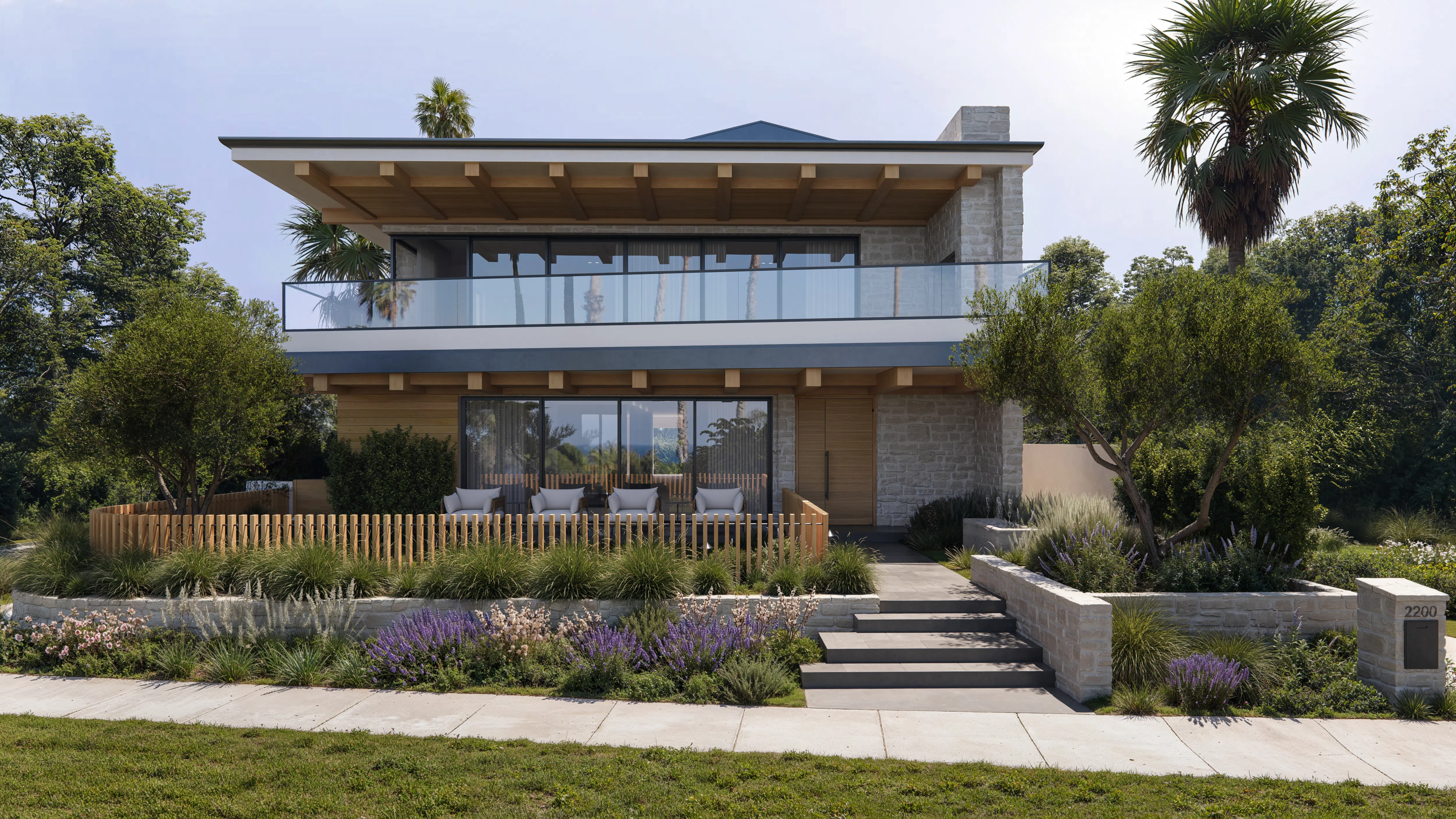
That single production chain is what turns the plays above into a working presale system rather than a coordination project. For The Preserve at the Woodmere Club, a roughly 150-residence community in Five Towns, Long Island, the studio carried one brand idea into the renders and the landscape so the marketing and the product told the same story. Pricing is custom and scoped to project scale, typically starting around $15,000 for a full pre-sale stack. The point a developer should weigh is the mechanism: in-house CGI, one engagement, 5 weeks to a live sales tool that starts counting reservations toward the bank’s threshold.
How should you apply these strategies to your own project?
The right mix depends on your project’s stage, size, and financing deadline, so map the plays to your situation rather than running all ten at once. A vendor-neutral way to sequence the work is to start with the financing math, then build only the assets that move a buyer toward a binding reservation.
- First project, single building: Prioritize plays 2, 4, and 6. A gallery, a real sales website, and a fast live date give you a credible presence without a full ecosystem budget.
- Second project or multi-unit: Add plays 3, 8, and 9. View-from-window, broker one-link presentations, and CRM-tracked pipeline matter more as unit count and broker involvement grow.
- Tight financing deadline: Lead with plays 1, 6, and 10. Name the threshold, compress the timeline, and start early, because the loan release is the hard constraint everything else serves.
- Fragmented vendor setup today: Play 7 is the unlock. Consolidating CGI, web, and brand under one chain removes the drift and delay that a multi-vendor stack builds in.
Whatever the mix, judge each strategy by one test: does it produce a signed reservation that counts toward the presale threshold? If a tactic cannot be traced to that outcome, it belongs lower on the list. Then talk to a partner who produces the visuals, builds the sales tools around them, and delivers fast enough to matter before your financing window closes.