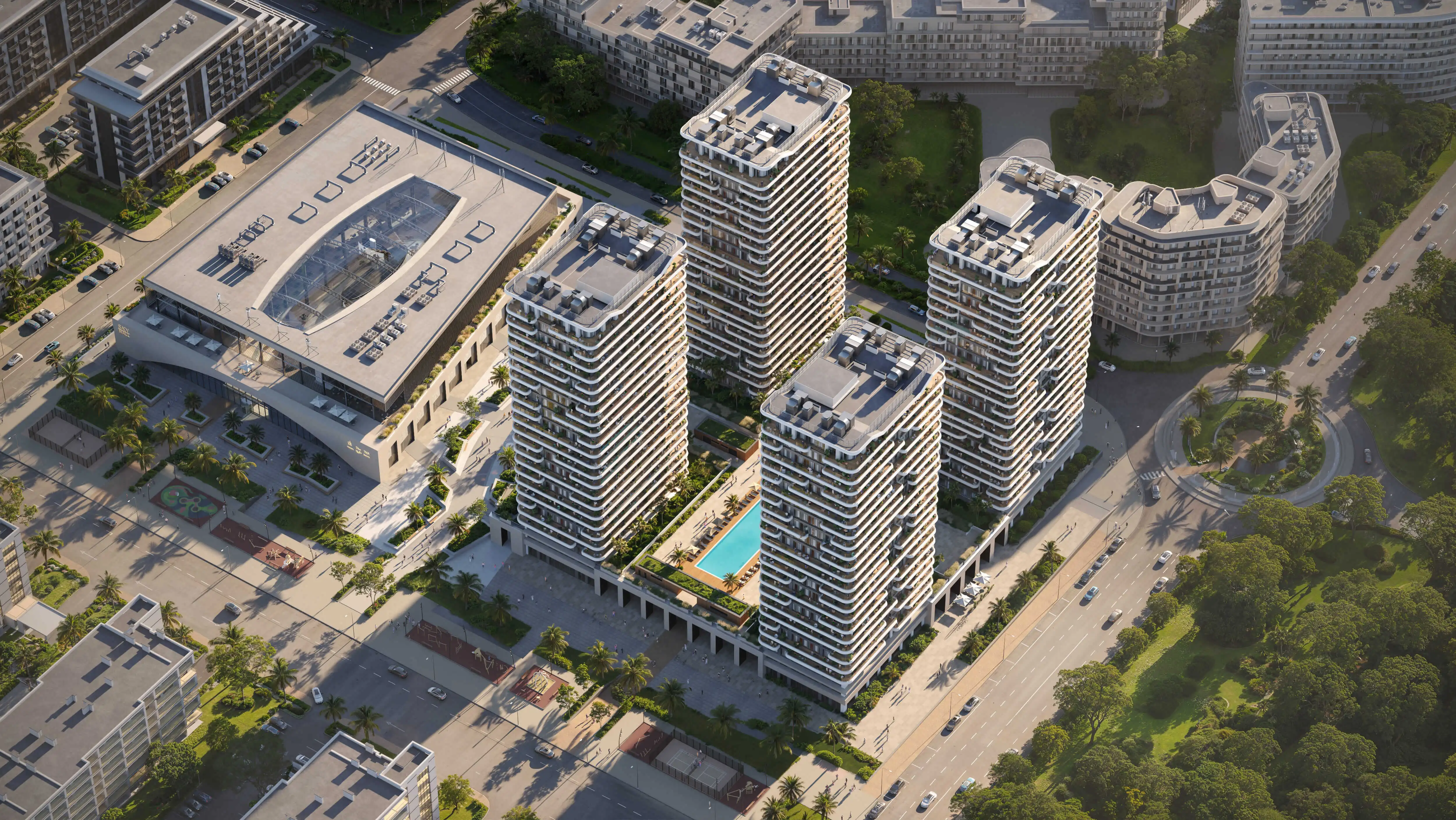
Table of contents
Most multifamily developers break ground with architectural renders and a leasing brochure, then expect units to absorb on schedule. The renders explain the building. They do not fill it. And when a construction lender ties the next draw to a pre-leasing or pre-sale milestone, explaining the building is not enough.
The market is moving in your favor on supply and against you on pricing power. New deliveries fell 30% year over year in the first quarter of 2026, while net absorption rebounded to 78,100 units (CBRE, 2026). Demand is back, yet you still have to convert it faster than the project down the road. This guide covers where the market is heading, eight multifamily marketing strategies built for the pre-sale moment, and the KPIs that tie every dollar to absorption.
Multifamily marketing is how a developer attracts, converts, and retains buyers or residents for a property with multiple units: apartment communities, condos, and mixed-use developments, across the pre-sale, lease-up, and stabilized stages. For a developer, it is revenue engineering. The work produces a signed-unit event before construction finishes, not a brochure that describes the building.
Where Is the Multifamily Market Heading in 2026?
The 2026 multifamily market is tightening. New deliveries are falling sharply while apartment demand rebounds, which pushes vacancy down and absorption up. For a developer bringing new units to market, that shift changes which marketing moves protect your financing timeline. Five trends should shape the plan.
New Supply Is Falling Just as Demand Returns
Supply and demand crossed over in early 2026. New deliveries dropped to 58,100 units in the first quarter, down 30% year over year, while net absorption reached 78,100 units and the national vacancy rate fell to 4.8%, below its long-term average of 5.0% (CBRE, 2026). For developers still leasing recent deliveries, the window to absorb is opening. The projects that look complete and credible online capture that returning demand first, because renters compare communities long before they schedule a tour.
Rent Growth Is Thin, So Velocity Beats Price
You cannot discount your way to absorption in 2026. Average monthly rent rose just 0.2% year over year to $2,217 in the first quarter, even as conditions improved(CBRE, 2026). Thin pricing power means concessions eat straight into your pro forma. The lever you control is speed: moving a prospect from first click to signed reservation before the project down the road does. Converting a lead in days instead of weeks protects margin better than another month of free rent.
New Construction Is Back in Favor, and Judged Online
Buyers are warming to new product. New-home purchases rose to 16% of the market, the highest share since 2006, with buyers citing the ability to customize and avoid repairs(NAR, 2025). Here is the catch for a developer. Pre-construction product cannot be walked through, so the buyer judges it on digital assets alone. Renders, a virtual tour, and a sales gallery are the only version of the unit a buyer can experience before handover.
Capital Is Concentrating in Multifamily, but Selectively
Investors still favor the sector. Multifamily drew $29.5 billion in investment in the first quarter of 2026, the second-largest share of all commercial real estate volume at 25%, though total volume slipped 6% year over year(CBRE, 2026). Capital is available, but underwriting rewards projects that can show real absorption. Lenders and equity partners price the risk by what they can see in your pipeline. A pre-sale or pre-leasing track record is now part of how you de-risk the deal.
Brokers Still Close the Deal, So Your Tools Have to Reach Them
Digital discovery gets a buyer to the shortlist, but a person usually closes the sale. In 2025, 88% of buyers purchased their home through an agent or broker(NAR, 2025). For a developer, that means your marketing has to arm the broker as much as it courts the buyer. Give them real-time inventory, unit-level renders, and pricing they can pull up in the room. The projects that absorb fastest treat brokers as a channel to equip.
Which Multifamily Marketing Strategies Work in 2026?
The strategies that move the needle in 2026 share one trait. They compress the distance between a prospect’s first click and a signed reservation. Each one below ties to absorption pace, financing evidence, or cost per signed unit, not to vanity reach. Run them as a sequence: build demand, show the product, convert it, then hand brokers the tools to close.
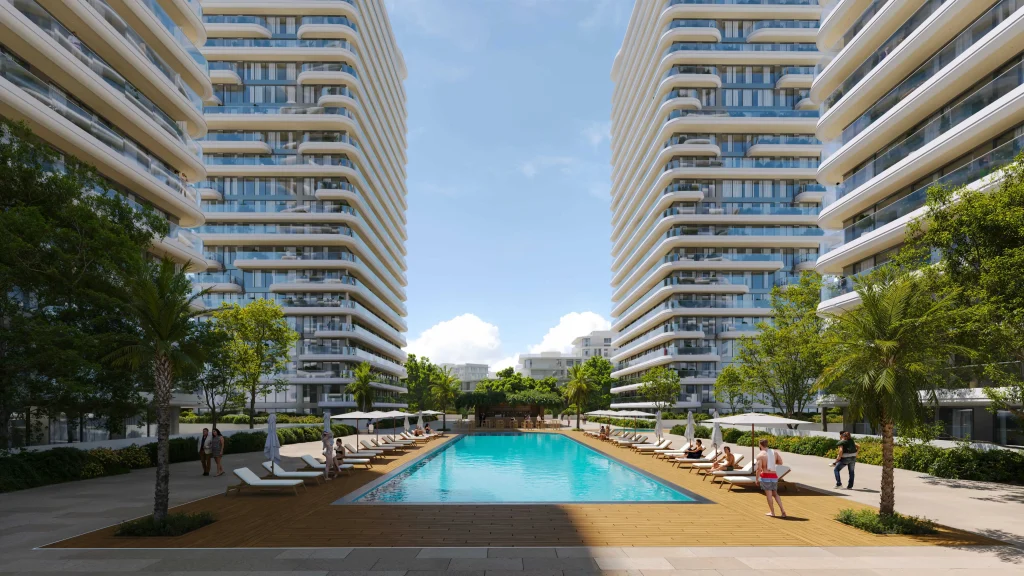
1. Start Marketing Before You Break Ground
Begin marketing 6–12 months before you need signed units, not at certificate of occupancy. A pre-launch waitlist captures interested prospects while construction runs, so you enter lease-up or pre-sale with demand already in hand. That head start turns a financing milestone from a deadline into a formality.
Build the list with a simple registration page, then nurture it with construction updates and priority unit selection. Reveal the project in phases: master plan, then amenities, then units, then pricing. A phased reveal keeps the list warm for weeks and steadies your absorption curve once the bank starts watching.
2. Use CGI Renders to Sell the Unit That Does Not Exist Yet
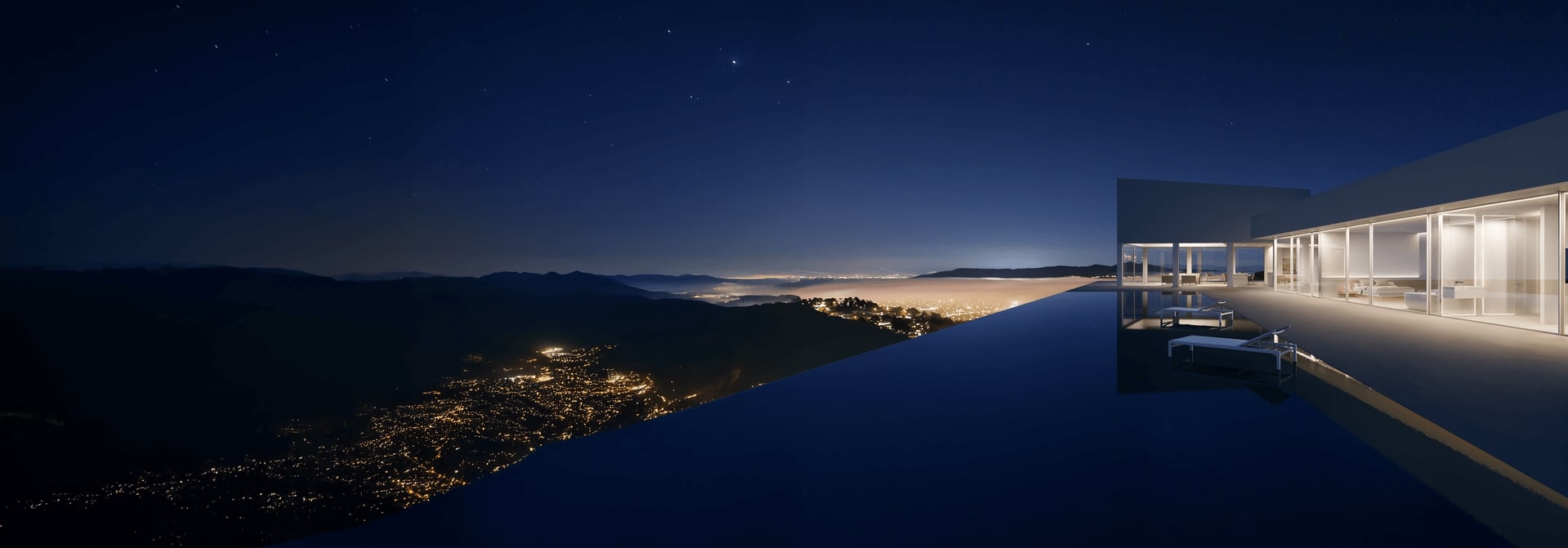
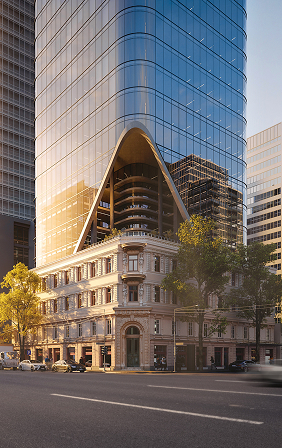
For pre-construction multifamily, the render is the product. A buyer cannot tour an unbuilt unit, so photorealistic CGI renders carry the whole decision: interior feel, exterior context, and the lifestyle the address implies.
The render has to show how the space lives, because emotional attachment before physical contact is what drives the reservation. Place people in the unit and show it in use, rather than empty architectural shells. In 2026, visual quality drives the buyer’s decision, so treat it as a commercial asset rather than a finishing touch.
3. Replace the Sales PDF With an Interactive Digital Sales Gallery
A PDF explains a unit; a digital sales gallery sells it. The gallery puts renders, animation, a 3D tour, the interactive floor plan, the view from each unit, and pricing behind one link a buyer or broker can open in seconds.
The window between first contact and the decision to hold a unit is short. A gallery that lets a buyer explore, configure, and feel ownership inside that window earns its cost. The same gallery runs on an iPad in the sales office, where the agent leads the walkthrough. A static brochure asks the buyer to imagine; the gallery lets them decide.
4. Give Every Floor Plan a View-From-Window Render
In multifamily, two units with the same floor plan sell at different prices on view alone. A view-from-window render shows the real outlook from a specific unit on a specific floor, which turns a price premium into a decision a buyer understands.
Produce one for each unit type and orientation: north, south, courtyard, and the higher floors. Then a broker can explain the difference between unit 1204 and unit 1804 without doing the math out loud. The view is often the biggest factor a buyer feels and pays for, which makes this one of the strongest reasons a sales tool helps units absorb faster.
5. Treat the Development Website as Your Conversion Engine
Your project deserves its own development website, not a single page on a corporate site. The site is where paid traffic, organic search, and broker referrals land, so it has to answer the buyer’s real questions: unit mix, pricing, availability, location, and what life there looks like.
Most prospects arrive on a phone, so page speed and a clean mobile layout decide whether they stay. Give every page one clear next step: register interest, book a tour, or reserve a unit. A development website that loads fast, shows floor-plan-level detail, and embeds the sales gallery converts the traffic the rest of your marketing works to create.
6. Position the Development as Its Own Brand
Buyers check the developer before they sign, and a project with its own clear brand reads as a place worth committing to. Position the development as a brand separate from your company: a name, an identity, and a single idea the buyer remembers.
A consistent brand across every render, the sales gallery, and each piece of collateral shortens the path to reservation, because the buyer recognizes the project everywhere they meet it. Define the position first, then carry it through the visuals. On The Preserve, a 55+ condominium community, one idea (staying rooted in a familiar place while downsizing) runs through the renders, the landscape, and the messaging, so the brand reads as made for its buyer.
7. Get Found in AI Search and Local Search
Renters and buyers now start in more places than Google. They ask ChatGPT, Gemini, and Perplexity for “new apartments near downtown with a pool,” and they check Google Maps before a listing site.
Structure your project content so AI tools and local search can read and surface it: location, pricing, availability, amenities, and lifestyle. Clear headings, plain-language answers, and structured data on the development website make the project easy for a model to quote. A complete site and an accurate map presence make your project the answer these tools return. Publish the key facts in plain text a model can parse: an amenities list, a pricing summary, and an FAQ. Visibility in 2026 means being legible to machines, not only to people.
8. Equip Your Brokers With Real-Time Inventory and Unit-Level Materials
Brokers close faster when the answer is always in front of them. Give them a CRM-linked sales gallery that shows real-time availability and pricing, so a unit marked sold disappears the moment another buyer signs.
Pair it with unit-specific materials that generate in one click: a floor plan, the view render from the real orientation, pricing, and a payment plan. Removing the “let me check if it’s still available” delay removes the friction that loses deals, and it keeps your pipeline and the broker’s pitch in sync. Your sales tools should make the broker’s job a single conversation.
Which KPIs Should Multifamily Marketers Track in 2026?
Track the metrics a lender or investor would recognize, not just traffic and impressions. The KPIs below connect marketing spend to absorption, cost per signed unit, and the financing timeline. Pull the fast-moving ones weekly during lease-up, and review return on spend and cost per signed unit monthly so you can move budget toward the channels and unit types that need it.
- Absorption rate: units leased or sold per month. This is the number your construction lender watches, and the one every other KPI should ladder up to. Report it as units per month against your covenant schedule.
- Pre-sale velocity (time-to-threshold): how long it takes to reach the pre-leasing or pre-sale milestone that unlocks or sustains financing. Shorter is cheaper, because carrying costs run while you wait.
- Cost per qualified lead: marketing spend divided by leads that match your unit mix and budget. Filter for qualified, not raw, or the figure flatters channels that send the wrong renters.
- Lead-to-reservation conversion: the share of qualified leads that place a deposit or sign. This is the truest test of whether your sales gallery and website close, rather than just inform.
- Digital sales gallery engagement: time spent in the gallery and the number of units configured. It signals buyer intent inside the first 24 hours, before a lead ever raises a hand.
- Website conversion rate: visitors who become registered leads. It tells you whether your development website sells the project or only describes it.
- Cost per reservation (or signed lease): total marketing spend per signed unit. This figure maps directly onto your pro forma and your investor reporting.
- Return on marketing spend: revenue or signed-lease value per dollar of marketing, compared by channel. It shows where to move budget as lease-up progresses.
No single KPI tells the whole story. Read cost per qualified lead, lead-to-reservation, and cost per signed unit together, because a cheap lead that never reserves costs more than an expensive one that does. The pattern across them shows whether to fix the funnel or feed it.
How Does Fortes Marketing Help Developers Execute This?
Fortes Marketing is the pre-sale marketing studio that delivers CGI renders, a digital sales gallery, and a developer website as one engagement, built in-house by its parent studio Fortes Vision. It is the one studio that replaces three vendors: a CGI studio, a web agency, and a branding designer.
What you get with Marketing.Fortes.Vision:
- CGI renders that sell unbuilt units, produced in-house.
- A digital sales gallery built directly from those renders, so visual consistency is structural rather than a revision cycle.
- A developer website that captures and routes leads into your pipeline.
- Brand identity as the cohesion layer across all of it.
Why one studio beats three vendors:
- It removes the coordination cost of briefing three vendors, reconciling their files, and chasing a consistent look.
- In-house CGI is the mechanism behind the 5-week timeline, which matters when the market rewards velocity and online-first decisions.
- It gives a lender or equity partner something concrete to underwrite: a working sales tool and an early pre-sale track record.
Typical pricing (exact scope routes to an estimate):
- Digital sales gallery: from around $12,500, with a standard build near $25,000.
- Full pre-sale stack: roughly $10,000 for a single building up to $100,000 and beyond for a full marketing ecosystem, by unit count and scope.
- For a figure tied to your project, request an estimate.
How Do You Apply This to Your Project?
Start from your financing timeline and work backward. The right scope depends on your unit count, whether this is your first or second project, and how soon the bank expects pre-sale or pre-leasing evidence. Put the milestone date on the calendar, then give yourself 6–12 months of runway in front of it.
Match the stack to the project:
Match the stack to your project
pre-sale marketing stack
Match the stack to your project
| Project profile | Recommended pre-sale stack |
|---|---|
| First or smaller project≈5–30 units | A coordinated render set, a digital sales gallery, and a development website. |
| Larger multi-unit project | The lean stack plus view-from-window renders per unit type, interactive unit selection, a CRM-linked broker gallery, and a development brand. |
Read the signals as you go:
- Brokers say buyers cannot picture the finished unit: that is a render and gallery gap, not a pricing problem.
- Qualified leads stall before reserving: check gallery engagement and lead-to-reservation before you add spend.
- Pace the budget to the pipeline: heavier at pre-launch, lighter once absorption holds, ready to push again on slow unit types.
- Add the development brand once the gallery and website are in place, since it is the cohesion layer rather than the starting point.
The right partner is not the one with the longest service list. It is the one whose work closes buyers before the building exists, and before your financing window closes. Compare vendors on who produces the visuals, who builds the sales tools around them, and how fast they deliver. Build for the buyer’s first 24 hours, measure against absorption, and keep the work under one roof so it ships in weeks, not quarters.